









Limited-Life Philanthropy
For over 100 years, the most familiar form of institutional grantmaking in the U.S. has been the perpetual foundation — an organization created to exist and serve communities indefinitely into the future. But today, an increasing number of private and family foundations are choosing instead to set an end date for their existence.
Since 2017, the Johnson Center has been engaging with limited-life philanthropy across a range of initiatives — from a themed issue of The Foundation Review, to facilitating a peer-group of spend-down foundation executives, to launching a new course on the principles of limited-life philanthropy for foundations in 2026. As this segment of our sector grows, we are eager to learn, share, and engage with colleagues around the world.

More Foundations Opt for Planned Lifespans and Spend-Down Strategies
While broad-based research into the phenomenon of “limited-life philanthropy” — also called spend-down, sunset, or even sunrise philanthropy — is still fairly limited, it’s clear from the headlines that an increasing number of philanthropic families and foundations are choosing to adopt this approach. What’s driving this shift? And what lessons and legacies are already beginning to emerge?

Foundations are No Longer Wedded to the Long Game
Patience has been a defining aspect of institutionalized philanthropy for decades; permanent endowments meant foundations could afford to invest in change over the long term. Since 2010, however, there has been a significant shift toward creating foundations that have a defined endpoint. Donors’ reasons for creating these limited-life foundations vary widely.
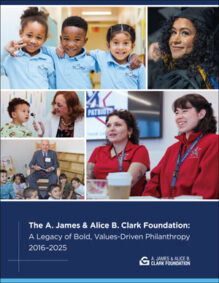
The A. James & Alice B. Clark Foundation: A Legacy of Bold, Values-Driven Philanthropy 2016–2025
This case study examines the Clark Foundation’s experience implementing its limited-life strategy, balancing the pursuit of immediate, measurable outcomes with the cultivation of strengthened capacity in partner institutions. The study highlights lessons for foundations considering time-limited philanthropic models and contributes to the growing literature on the practice and ethics of intentional philanthropic closure.
Time-Limited Foundations: Lessons from a CEO Peer Group
Rather than explore the why of spending out, this report provides insights into the day-to-day leadership and management of these foundations. For foundations or donors considering whether to have a defined lifespan for their giving, this resource provides insights into the practical implications of that decision.
Foundation Exits: A Survey of Foundations and Nonprofits
The Johnson Center collaborated with Independent Sector on a survey to better understand practices in ending funding relationships from both the funders’ and grantees’ perspectives. This 2019 report offers high-level conclusions about the exit experience, as well as recommendations for funders considering a limited lifespan.
A Peer Group of CEOs in Limited-Life Philanthropy
Since 2019, the Johnson Center has facilitated a peer-learning group of high-level leaders in limited-life (or spend-down) philanthropy. The chief executive officers of over a dozen foundations with defined closure dates convene virtually and in person several times a year for an experience that blends structured learning, facilitated discussions, and intentionally free-flowing networking.
The group currently has 18 different member organizations, with assets ranging from $26 million to $1 billion. Group members build a community of partners who share resources and perspectives to support impact in the field.
• Fred and Barbara Erb Family Foundation
• Fund for Lake Michigan
• Herrick Foundation
• Irving Harris Foundation
• Jacob & Valeria Langeloth Foundation
• James B. McClatchy Foundation
• McCune Foundation
• Nina Mason Pulliam Charitable Trust
• Posner Foundation
• Ralph C. Wilson, Jr. Foundation
• Ruth Nelson Family Foundation
• Tara Health Foundation
• Tikkun Olam Foundation, Inc.
• Wallace Global Fund
• Compton Foundation (closed)
• Gary Community Ventures
• James & Alice B. Clark Foundation (closed)
• The Lenfest Foundation (closed)
• The Medina Foundation
• Stupski Foundation
• The Whitman Institute (closed)
Are you or your organization interested in participating in the group?

“Deciding whether to empty the vaults is often more personal than political. Ensuring that future foundation boards will adhere to a donor’s wishes gets trickier the longer a foundation exists.”
Elizabeth Dale on limited-life philanthropy models
The Chronicle of Philanthropy
IN THE MEDIA
Beyond Spend-Down vs. Perpetuity: Five Alternative Paths
Limited-Life Philanthropy in the News

“Needs change and grow in ways that it’s important to have the active agility that allows philanthropy to be the best partner it can to the well-being of the community.”
Lesley Slavitt on the Richard and Helen DeVos Foundation
Crain Currency
“Sunsetting a foundation with the massive wealth of the Gates Foundation is unprecedented and will likely require strong strategic planning.”
Elizabeth Dale on the Gates Foundation
The Chronicle of Philanthropy

“Some donors want their family or people who knew them to make the funding decisions. Other donors believe that today’s problems should be addressed with today’s resources, she said. And still others believe that they are more likely to have an impact if there’s a higher concentration of resources over a short period of time.”
Teri Behrens on the Fred A. and Barbara M. Erb Family Foundation
Crain’s Detroit Business