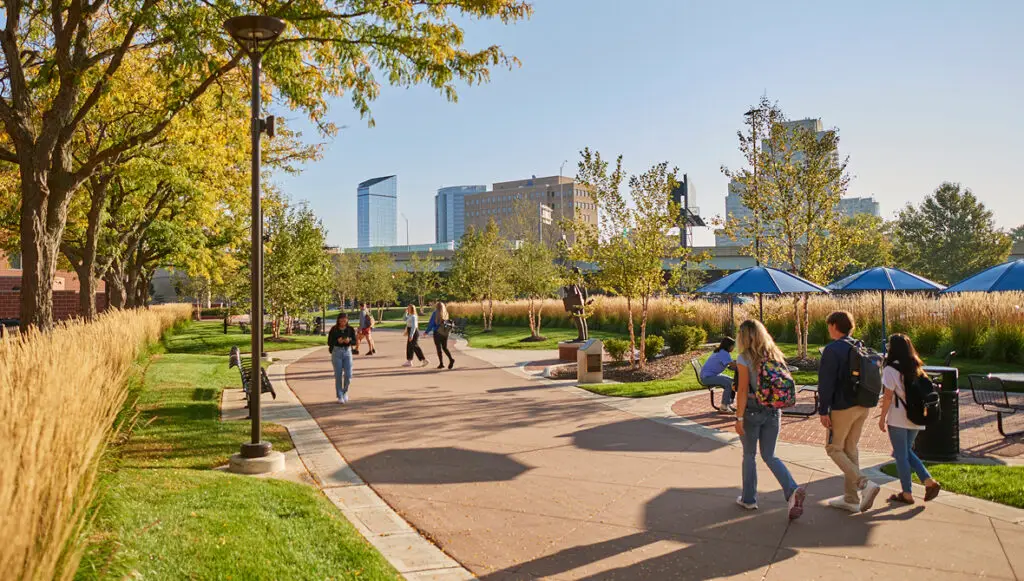
What do we mean when we talk about “community?” The word is used with great frequency, and its meaning is often assumed rather than examined. Before we can explore what community philanthropy is or why it matters, we must first grapple with the term “community” itself. This matters because the word philanthropy — from the Greek, “love of humanity” — finds its most grounded expression in community: it is there, in the relationships of everyday life, that love of humanity becomes something you can actually touch.
Perhaps the most common usage of the word community is with reference to geography — a neighborhood, town, or region. Community can also be powerfully experienced through shared identity, lived experience, faith, or collective purpose. Often, where one lives reinforces these other meanings. These varying usages shape who is seen as part of a community, who is one of us, and who is not. How we draw those lines has significant implications for how we understand accountability, solidarity, and care.
If we understand the word community in the way social psychologists use it, referring to a “sense of community” that includes feelings of connection, belonging, and trust (McMillan & Chavis, 1986)[1], then it is clear that the fabric of communal life in the United States is fraying. Survey data demonstrate that Americans are lonelier, less trusting, and less connected than at any point in recent memory (U.S. Department of Health and Human Services, 2023). In 2023, U.S. Surgeon General Vivek Murthy issued a stark warning: loneliness and social disconnection pose a grave public health risk, equivalent to smoking 15 cigarettes a day (U.S. Department of Health and Human Services, 2023). This “epidemic of loneliness,” he argues, undermines not only individual well-being but the cohesion of society itself.
Looking back on American history, it may seem that this moment is an anomaly. Reflecting on his visit to the U.S. in the 1830s, de Tocqueville proclaimed that Americans are “forever forming associations,” a phrase that now seems outdated (1835/1969). The same could be said of the assertion of noted historian Arthur Schlesinger Sr. that we are “a nation of joiners” (1944). Participation in the traditional social groups that once connected Americans — PTAs, churches, labor unions, fraternal organizations, and neighborhood associations — has thinned. As Putnam (2000) famously documented, we are no longer joining teams and leagues but rather are “bowling alone.”
However, the story is not simply one of decline, but one of ebbs and flows. Putnam and Garrett (2020) document the shifts in the twentieth century from “I” to “We” and back to “I,” finding hope in the possibility that if the people in the U.S. could assemble a “We” once, we can do it again. We are at a moment when America’s democracy is “diminished,” “leaving gaping holes in the fabric of our social and political life” (Skocpol, 2003, p. 254). Skocpol goes on to argue that we must reweave that fabric in ways that are more intentionally inclusive and responsive to the realities of income inequality and constraints on democratic participation.
Taking these initial reflections into account, it becomes clear that community is not fixed; it is a dynamic and evolving experience. Our sense of community — and how we feel its presence or absence — shifts over time, shaped by both local conditions and the broader national social and political landscape. Community can be a source of support and healing, but it can also divide and exclude. At times, those divisions create opportunities to redraw boundaries and expand our sense of belonging; at others, they may deepen conflict. Understanding the complexity of community is essential if we are to take seriously the practice of community philanthropy — an approach to giving and organizing that relies not only on pooled resources, but on relationships, values, and solidarity.
This essay explores the contours of community as a concept and an empirical phenomenon. In doing so, it lays the foundation for a broader argument: that community philanthropy is not merely about where resources come from or how they are distributed, but about how we understand and enact community itself.
The English word “community” derives from the Latin communitas, composed of com (together) and munus (obligation or gift). At its core, it means “sharing together” or “joint responsibility.” Medieval Latin used communitas to refer to both ecclesiastical and civic bodies whose members were bound by mutual obligation. The Oxford English Dictionary also traces communis to meanings such as “fellowship, community of relations or feelings.” Thus, from its origin, community entailed not only shared space but shared responsibility. The word philanthropy — from the Greek philos(loving) and anthropos (humanity) — carries the same relational logic: it, too, implies an orientation toward others, not as distant beneficiaries but as fellow members of a shared human community.
Just as human society evolved, so too did humanity’s understanding of the word community. In eighteenth- and nineteenth-century Western political thought, community served as a crucial mediator between the individual and the state. In the twentieth century, Ferdinand Tönnies’ (2001) seminal framework distinguished between Gemeinschaft(community) and Gesellschaft (society), juxtaposing the intimacy of local, personal ties with the anonymity of modern economic relations.
As Raymond Williams (1976) observes, community is a “warmly persuasive” term in the English language — evoking emotional resonance and a sense of belonging — yet it remains conceptually elusive (pp. 75–76). Unlike other terms of social organization, such as state, nation, or society, community is almost never used unfavorably. Williams traces its usage back to the fourteenth century, showing how it has referred both to actual social groups and the emotional dimensions of human relationships. It is this dual character that gives community its rhetorical power — and its complexity.
It is abundantly clear that there are multiple understandings of community as applied to social groups. Communities take many forms. The typology below, drawn from the Encyclopedia of Community, reflects multiple disciplines and practice-based examples.
| Type | Basis of Membership | Examples |
| Affinity | Shared interest | Book clubs, artists’ colonies |
| Instrumental | Shared goals | Activist groups, hospice teams |
| Primordial | Blood, kinship, ethnicity, belief | Diaspora networks, religious orders |
| Proximate | Geographic location | Neighborhoods, towns |
| Practice | Shared profession or craft | Teacher unions, nursing alliances |
| Virtual/Digital | Mediated through technology | Online forums, gaming communities |
| Circumstantial | Shared life conditions | Refugee camps, support groups |
Sources: Christensen & Levinson, 2003; Douglas, 2010.
This diversity reveals that while community often implies togetherness, it may emerge from vastly different experiences — some chosen, others inherited or imposed.
Moving from the descriptive to the affective (McMillan & Chavis, 1986), the development of the concept of a sense of community adds conceptual clarity and psychological depth to the term “community” by emphasizing subjective experience over external structure. This theory identifies four key elements that define a sense of community: membership, influence, integration and fulfillment of needs, and shared emotional connection. Rather than focusing on external structures, it emphasizes the dynamics through which people experience community in everyday life — such as in neighborhoods, dormitory basketball teams, or religious congregations — where these elements can be seen in action. Their distinction between territorial and relational communities is especially useful for community philanthropy, which often blends both.
“Rather than focusing on external structures, [the concept of a sense of community] emphasizes the dynamics through which people experience community in everyday life — such as in neighborhoods, dormitory basketball teams, or religious congregations — where these elements can be seen in action.”
Building on this earlier work, McMillan and Lorion (2020) reflect on how the psychological sense of community can be claimed by both inclusive and exclusionary movements, emphasizing that the same emotional bonds that foster belonging can also reinforce resistance to change. They urge scholars and practitioners to grapple with this dual nature, recognizing that a strong sense of community can deepen connection or entrench division, depending on how communities define who belongs and how they view those who do not.
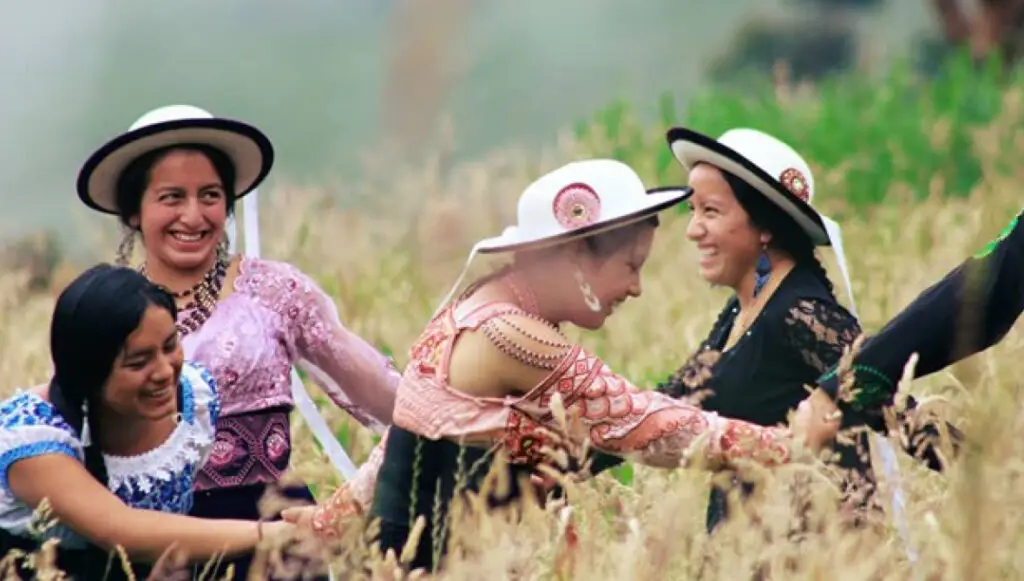
Across the globe and through time, diverse cultures embody rich traditions that emphasize communal bonds, mutual aid, and collective identity. These traditions are essential reminders that community is not only a structural arrangement but a worldview; a way of understanding oneself through relationships and in relation to others.
In many cultures in southern Africa, ubuntu — often translated as “I am because we are” — articulates a profound ethic of mutual care and interdependence. Rooted in the Bantu languages, ubuntu emphasizes that an individual’s humanity is inextricably linked to the humanity of others. The scholar Michael Onyebuchi Eze (2011) explains that ubuntu defines the virtues of an ideal community member, challenges the legacy of colonialism, and underpins the humanist foundations of post-apartheid South Africa (p. 10).
In the Andean regions of South America, particularly among Quechua-speaking communities, minka (also known as minga) refers to a tradition of communal labor. Derived from the Quechua word minccacuni, meaning “asking for help by promising something,” minka involves voluntary collective work for purposes of social utility and community infrastructure projects. This practice fosters social cohesion and ensures the well-being of the community through shared responsibility.
In various Indigenous communities throughout Mexico, tequio denotes a form of unpaid communal work performed for the benefit of the community. Originating from the Nahuatl word tequitl, meaning “work” or “tribute,” tequio encompasses activities such as building infrastructure, maintaining communal spaces, and organizing festivals. Participation in tequio is considered a civic duty and a means of reinforcing communal bonds and cultural identity.
In the Philippines, bayanihan embodies the spirit of communal unity and cooperation. The term originates from the word bayan, meaning community or nation, and traditionally refers to the practice of neighbors helping a relocating family by physically moving their house to a new location. Beyond this iconic image, bayanihan represents a broader cultural value of collective action and mutual support, evident in various aspects of Filipino society.
These diverse traditions underscore that community is deeply rooted in shared values, collective responsibilities, and mutual care — a sharp contrast to the more individualistic assumptions that dominate much of Western social thought. In each of these traditions, the love of humanity is not an abstraction; it is enacted through community, which is where it has always lived.
Social science has recently found compelling evidence for what these traditions have always understood. Sociologists and psychologists have illuminated the mechanisms by which community shapes human behavior. In Making Democracy Work, Putnam and his co-authors (1993) popularized the concept of social capital, the networks of trust and reciprocity that make societies more cooperative and help “make democracy work.”
In research sponsored by the Generosity Commission, Dietz (2024) finds that strong community ties predict higher rates of giving and volunteering — and that the relationship runs both ways. As Dietz puts it, “group involvement is the main way in which social connections encourage generosity, and by which generosity can strengthen civil society” (p. 18). Participation in associations — whether congregations, civic groups, or campaigns like GivingTuesday — is not only an outcome of generosity but its most effective catalyst. Community, in other words, is not merely a sense of belonging but a set of organized relationships through which people act together, and investing in those relationships is central to sustaining philanthropic engagement.
Belonging, as Allen et al. argue (2021), is not merely beneficial; it is biologically necessary. Social connection impacts everything from mental health to mortality, immune function to civic engagement. Loneliness, as documented by the Office of the Surgeon General (2023), is not just a personal affliction but a societal crisis.
Community can empower, but it can also exclude. As Bellah (1995) and others caution, tightly bonded groups may foster solidarity at the cost of openness. “The word ‘community’ leads a double life,” Bellah writes. “It makes most people feel good, associated as it is with warmth, friendship, and acceptance. But among academics, the word arouses suspicion. Doesn’t community imply the abandonment of ethical universalism and the withdrawal into closed particularistic loyalties?”
Communities built on shared identity or belief may suppress dissent or marginalize outsiders. Social capital is not always benign; from the KKK to criminal gangs, social connectedness can fuel extremism and facilitate illegality just as readily as solidarity and generosity.
Putnam’s contrast between bonding and bridging social capital is instructive and memorably expressed. Bonding capital, he writes, is “a kind of sociological superglue,” holding tight-knit groups together to generate loyalty, solidarity, and mutual support. Bridging capital, by contrast, is “sociological WD-40,” loosening the friction between different groups to enable connection across social divides (2000, p. 23). Both are essential, and neither is sufficient on its own. A society rich in bonding but weak in bridging risks hardening into mutually hostile camps; one that bridges without bonding may lack the depth of trust that makes community feel real.
This is precisely the challenge that john a. powell and Stephen Menendian take up conceptually in Belonging without othering: How we save ourselves and the world (2024) and practically through the Othering and Belonging Institute at the University of California, Berkeley. Their central argument is that the drive for belonging — one of our deepest human needs — too often tips into “othering,” the tendency to define a group’s identity by casting others as irreconcilably different or threatening. The problem, they argue, is not belonging itself, but the narrowness of the identities on which it rests. The path forward, powell and Menendian (2024) argue, lies in expanding those identities — building forms of community that are rooted and particular, yet open and inclusive — so that belonging need not be built on exclusion.
Community does not emerge spontaneously; it develops over time, built through the deliberate work of organizers and the associations that hold civic life together. As Skocpol, Ganz, and Munson (2000) show, civic life in America thrived when it was rooted in robust membership associations, the kinds of groups that gave people both a reason to show up and a structure for doing so. Those associations created the conditions in which participation and generosity became possible.
That same logic applies today, even as the forms have changed. Yang et al. (2021) and others highlight the importance of what we might call “first movers” — leaders and organizations that create the conditions for giving and volunteering to take hold. Sustaining that capacity requires investment in the infrastructure that makes collective action possible in the first place, as a recent Urban Institute report makes clear (Tomasko et al., 2023).
Giving circles offer a vivid illustration of what this looks like in practice. By pooling resources and making decisions together, they turn individual generosity into collective action, and they do not do it alone. Hosts, networks, platforms, and field catalysts provide the operational and relational support that allows circles to persist, grow, and stay rooted in the communities they serve. As Rooted in Community (Loson-Ceballos & Layton, 2026) documents, this infrastructure is not incidental to collective giving; it is what makes it durable.
The word “community” is overused and underexamined. Yet it remains one of the most powerful in our vocabulary and experience. It not only helps to define who we are, but also how we choose to live together. At a time of fragmentation and isolation, to reclaim community is to reclaim the possibility of a more connected, generous, and just world.
Understanding community is essential to understanding philanthropy. Community and philanthropy share a root logic. Both begin with the recognition that we are, fundamentally, bound to one another: by place, by purpose, by the simple fact of our shared humanity. Philanthropy does not occur in a vacuum — it is embedded in social relations. Community philanthropy emerges when giving is shaped by and accountable to those most affected. It reflects a shift from charity to solidarity, from donating to sharing. Community philanthropy, then, is not a niche within philanthropy; it is generosity in its most enduring and essential manifestation.
Community is not a given; it is built. At a moment when isolation has become a public health crisis, this matters more than ever. The act of giving — together, accountably, and close to home — may be one of the most powerful ways we have left to find each other again.
________________________
[1] From p. 9: “A sense of community is a feeling that members have of belonging, a feeling that members matter to one another and to the group, and a shared faith that members’ needs will be met through their commitment to be together.”



© 2026 Dorothy A. Johnson Center for Philanthropy. All rights reserved.
201 Front Ave SW, Suite 200, Grand Rapids, Michigan 49504 | (616) 331-7585 | jcp@gvsu.edu