New Research on the Collective Giving Landscape in the U.S.

Collective Giving is on the Rise
In 2024, Axios named giving circles the fastest-growing form of philanthropy, citing significant growth in the popularity and infrastructure available to collective giving groups since 2016. Collective giving groups and the infrastructure that supports them are reshaping philanthropic practices, fostering social connections, and amplifying the voices of marginalized communities.
Led by a research team at the Dorothy A. Johnson Center for Philanthropy at Grand Valley State University in partnership with Philanthropy Together, the latest national landscape study of giving circles across the U.S. produced three research papers that:
- Deepen our understanding of the scale and diversity of collective giving.
- Develop a typology of giving circles.
- Identify how infrastructure effectively supports and encourages collective giving.
This research captures the contours of an evolving movement and the potential of collective giving across the philanthropic ecosystem. Check out all three reports below.
Key Findings
The latest research shows that participation in collective giving has grown to 4,000 groups contributing over $3.1 billion from 2017 to 2023 — more than doubling its impact in seven years. This not only fuels greater civic engagement but also fosters improved mental well-being while bridging political divides.
1. Collective giving is democratizing and diversifying philanthropy.
2. Collective giving greatly expands what gets funded.
3. Collective giving pushes the bounds of how philanthropy is practiced.
4. Collective giving deeply impacts members themselves.
5. Collective giving is a catalyst for social cohesion and change.
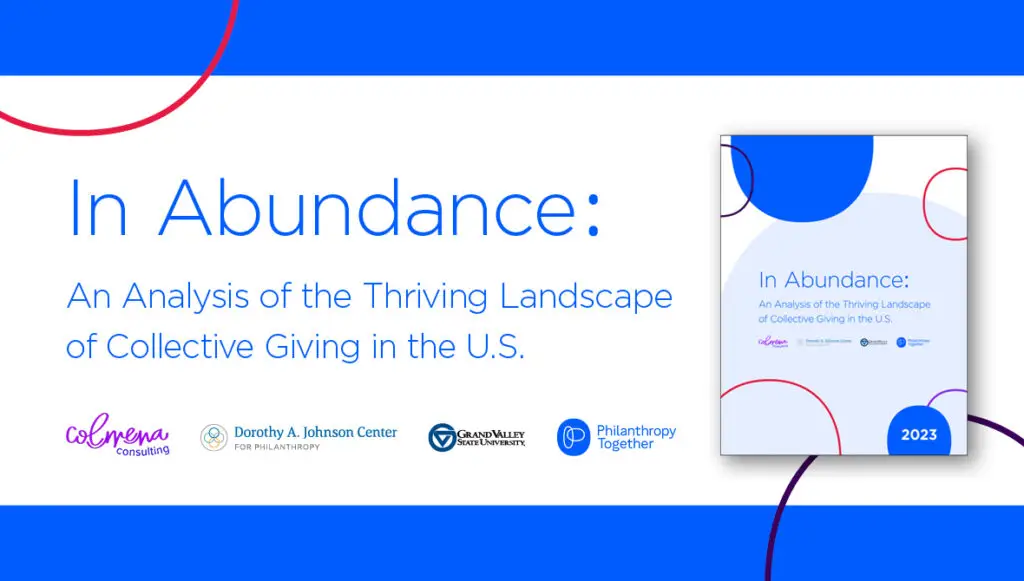
In Abundance: An Analysis of the Thriving Landscape of Collective Giving in the U.S.
This report features:
- Deep analysis of this research study’s five key findings
- A close look at the geography of giving circles and the impact of COVID
- Quotes and insights from giving circle members
Watch the Webinar
How has the field of collective giving shifted in response to recent world events? What is the impact of being in a collective giving group? Who is part of this movement?
Watch as lead researchers Dr. Adriana Loson-Ceballos and Dr. Michael D. Layton, along with Sara Lomelin, Isis Krause, and Ilyasah N. Shabazz of Philanthropy Together, discuss exciting key findings from the report.
Recorded April 2, 2024
Rooted in Community: The Infrastructure Powering Collective Giving
- Hosts
- Networks
- Platforms
- Researchers
- Field catalysts
The report’s findings show how infrastructure transforms local generosity into a durable, equitable movement:
- Infrastructure connects and strengthens the collective giving ecosystem.
- Infrastructure accelerates growth and builds legitimacy.
- Infrastructure expands access and broadens participation.
Patterns in the Tapestry: A Typology of Collective Giving Groups
- Women Giving Big
- Crowd Granting Networks
- Belonging Through Identity
- Organizing for Social Change
- Community Project Microgranting
- Live Crowdfunding Experiences
- Host-Supporting Groups
You’ll also find a practical worksheet to provide guidance to both those interested in starting new giving circles and those looking to refine and strengthen existing groups.
Watch the Webinar
Hear directly from Johnson Center’s Michael D. Layton, Ph.D., and Philanthropy Together’s Isis Krause, co-authors of Patterns in the Tapestry, as they delve into the seven archetypes of collective giving groups. This session provides interested and existing members and leaders of giving circles, SVP chapters, and other collective giving groups with a walkthrough of the practical framework highlighted in this report.
Recorded January 23, 2025
About the Researchers
Michael D. Layton, Ph.D.
Dr. Michael Layton holds the W.K. Kellogg Community Philanthropy Chair — the nation’s first endowed chair focused on community philanthropy — at the Dorothy A. Johnson Center for Philanthropy at Grand Valley State University. As a researcher, teacher, director, advocate, and consultant, he has worked closely with a mix of community philanthropy organizations throughout the Americas and brings to his position a nuanced understanding of the unique challenges and capacities of community philanthropy to act as a catalyst in promoting community-led development and in strengthening the local context for philanthropy. Dr. Layton has taught at both Wesleyan and Yale Universities, and also founded and directed the Philanthropy and Civil Society Project at the Instituto Tecnológico Autónomo de México (ITAM) in Mexico City, where he developed a groundbreaking research and advocacy program to understand and strengthen philanthropy and civil society. Michael is currently working with Philanthropy Together on a national landscape of giving circles to improve practice and enhance DEI in national reports of philanthropy. Learn More.
Adriana Loson-Ceballos, Ph.D.
Dr. Adriana Loson-Ceballos is a seasoned consultant specializing in evaluation, research, and fundraising. She co-founded Colmena-Consulting, a cooperative of consultants with marginalized identities, focusing on social justice values in philanthropy. With over a decade of fundraising experience, Adriana brings a unique perspective to her work, bridging grantee voices with decision-makers in philanthropy. Her participatory approach to evaluation and research, rooted in critical theories, amplifies community voices often sidelined in decision-making processes. Adriana’s commitment to collective action is reflected in her role as an evaluator for Philanthropy Together and her participatory evaluations of initiatives like the LatinXCEL Fund and the Latino Giving Circle Network. Her doctoral research on Latino giving circles and national research on collective giving demonstrate her dedication to amplifying marginalized voices in philanthropy. Adriana also volunteers on global philanthropy boards, the Women’s Funding Network and Social Venture Partners International, promoting social justice and empowerment worldwide. Learn More.