For decades, philanthropy has played a vital role in addressing the racial wealth gap through charitable grantmaking. Yet, as communities of color continue to face barriers to economic opportunity, many philanthropic organizations are recognizing that traditional grants alone are not sufficient to create lasting, systemic change. Increasingly, they are recognizing a reality: many of today’s most pressing challenges are not simply funding problems; they are capital access problems.
The federal government’s fiscal retreat from so many community service functions, and from the nonprofit sector broadly, means these problems are only going to get worse. We know philanthropy cannot close the entire gap, but opportunities to reconsider how we resource community development and equitably build wealth are plentiful. As we collectively look to our future and imagine ways to foster more resilient communities and more sustainable communities, flexible capital could lead the way.
Philanthropy’s broader role extends beyond grantmaking: supporting the community lending infrastructure that is best positioned to provide that flexible capital access to underserved individuals, entrepreneurs, and neighborhoods. Through program-related investments (PRIs), loan guarantees, mission-related investments (MRIs), and partnerships with Community Development Financial Institutions (CDFIs), foundations can support the lending infrastructure necessary for long-term community development.
The affinity between philanthropic foundations and CDFIs is particularly strong when addressing housing and neighborhood revitalization. Both sectors are focused on expanding opportunity, reducing disparities, and creating thriving communities. Foundations often identify community needs and desired outcomes, while CDFIs bring the financial tools, underwriting expertise, and patient capital required to move projects and families from aspiration to reality. Flexible lending infrastructure needs to be a key component of how philanthropy builds forward. We know this works and we know why it works—it’s a structure we as a field could take far more advantage of.
The concept of impact investing is hardly new. Take program-related investments (PRIs), for example. This strategy emerged following the Tax Reform Act of 1969, which helped clarify how foundations could deploy capital in ways that served charitable purposes while expecting repayment. Early financial innovators also viewed investment capital as a tool for economic justice and community development.
The idea was initially viewed as experimental, even radical. Critics worried that philanthropic foundations would become overly focused on financial returns, compliance, and risk management. Yet advocates argued that investments could achieve something grants could not: creating a recyclable source of capital and thus magnifying effects for underserved communities.
After periods of growth in the 1980s and renewed attention in the 2000s, impact investing has become substantially more mainstream. According to the US SIF Foundation’s biennial report, by 2022, approximately one out of every eight dollars under professional management in the U.S. was classified under sustainable or impact-oriented investment approaches.
Across America, communities face mounting challenges that cannot be solved through grants alone. Consider affordable housing. For most American households, homeownership remains the primary pathway to wealth accumulation. When families cannot afford homes, cannot access mortgage financing, or lose homes due to financial hardship, wealth-building opportunities disappear. Those losses in homeownership alone compound across generations and contribute significantly to the racial wealth gap.
The trend that population growth in the U.S. has consistently outpaced housing production suggests that even during periods of increased construction, new housing constructions have not compensated for decades of underbuilding. Additionally, workforce wage growth in the U.S. has slowed, particularly among low-income workers. Rising housing costs continue to outpace income gains. As the housing affordability crisis demonstrates, philanthropy cannot grant its way out of structural market failures.
As the housing affordability crisis demonstrates, philanthropy cannot grant its way out of structural market failures.
Similar dynamics can be observed in other sectors. A wide range of small businesses in low- and moderate-income neighborhoods routinely report difficulty obtaining affordable credit despite strong local demand. Take childcare facility operators and independent pharmacies, for example. These much-needed enterprises frequently struggle to obtain the financing needed for facility expansion. Small-scale but community-based healthcare entrepreneurs also often face barriers to acquiring or modernizing community-serving facilities.
These are not merely funding gaps; they are systemic failures due to entrenched exclusive practices in capital allocation. In many cases, communities possess the talent, leadership, and market demand necessary to thrive, but lack access to flexible financing that can support long-term development. Building equitable lending infrastructure is therefore essential. Sustainable solutions require long-term capital, scalable financing mechanisms, and institutions capable of investing where conventional markets often retreat.
Equitable lending infrastructure refers to the ecosystem of financial institutions, capital sources, products, and partnerships that ensure historically underserved individuals and communities can access fair, affordable, and wealth-building financial opportunities. These entities mainly include community banks, credit unions, and Community Development Financial Institutions (CDFIs). The latter alone is a sub-ecosystem that includes loan funds and microlenders. They exist to overcome market failures in larger financial systems.
Equitable lending infrastructure operates along a continuum. At one end are mainstream financial institutions that provide conventional mortgages, consumer loans, and commercial financing. At the other end are flexible, mission-driven but small-scale lenders that intentionally serve borrowers who may not fit conventional underwriting standards but nonetheless represent sound opportunities for investment. Together, these tools create pathways for capital to reach communities that have historically been overlooked by traditional markets.
For philanthropy, supporting equitable lending infrastructure represents an opportunity to move from funding individual projects toward bolstering systems capable of providing timely and flexible capital access. In community development and racial economic justice work, CDFIs serve as specialized financial intermediaries that provide underwriting expertise, risk management, deal structuring, and financing solutions designed specifically for underserved markets. CDFIs are not simply lenders; they are a core subsystem of the equitable community lending infrastructure.
If philanthropy seeks to close the racial wealth gap at scale, supporting CDFIs and community lending infrastructure may prove more impactful than funding isolated projects. By investing in CDFIs, providing guarantees, supporting revolving loan funds, and deploying mission-aligned investments, philanthropic foundations can help create a multiplying effect in financial systems that expand opportunity, strengthen communities, and accelerate efforts to close the racial wealth gap.
Community health offers a compelling example of why lending infrastructure matters. By providing flexible financing tailored to community needs, CDFIs help preserve and strengthen local health infrastructure, ensuring residents have access to medications, preventive care, nutritious food, chronic disease management services, wellness programming, and other essential resources close to residents in need.
| Blue Dove Pharmacy, Ypsilanti, MI | |
| Challenges | One neighborhood in Ypsilanti faced a growing healthcare access challenge when a long-standing neighborhood pharmacy closed after nearly two decades of operation. Many affected patients were older adults or individuals managing chronic conditions who lacked reliable transportation and had few alternatives for obtaining medications and health services.
At the same time, an immigrant pharmacist trained at Howard University, encountered repeated difficulties obtaining financing to start and grow her business, as traditional lenders viewed a first-time business owner in an evolving pharmacy market as a high-risk borrower. |
| Solution | After being turned down by other lenders, Jacqueline connected with the Opportunity Resource Fund, which provided the financing needed to establish her first pharmacy location and later expand into Ypsilanti. Her second loan supported facility build-out costs, equipment purchases, working capital, and staffing, enabling her to hire pharmacists and technicians and launch Blue Dove Pharmacy.
The investment also allowed the pharmacy to offer a broader range of community-oriented services, including medication compounding, hormonal health programs, pharmacogenomic testing, and free blood pressure screenings. |
| Impact | This pharmacy quickly became a critical healthcare resource for the community, absorbing nearly 70% of patients displaced by the previous pharmacy’s closure and helping ensure continuity of care.
Beyond dispensing medications, the pharmacy has served as a hub for preventive care and community support, helping residents access screenings, health information, and connections to additional services. Dr. Jacqueline has personally assisted patients by delivering medications, identifying unmet needs, and linking individuals to resources such as Meals on Wheels. |
On a system level, Social Determinants of Health (SDOH) investments addressing upstream conditions such as housing stability, food security, economic opportunity, transportation, and neighborhood infrastructure can improve well-being while reducing healthcare costs. For example, ProMedica, a nonprofit healthcare system serving communities in Ohio and Michigan, has become one of the nation’s most prominent examples of this approach. Through its SDOH initiatives and place-based investment strategy, ProMedica has invested in affordable housing preservation, neighborhood revitalization, food access, community development, and economic opportunity as part of a broader effort to improve community health.
In many cities, community centers provide a trusted place where residents can access after-school programs, job training, financial coaching, childcare support, health screenings, food assistance, and civic engagement opportunities. By bringing multiple resources together under one roof, these centers help families navigate crises and access opportunities. The cumulative effect is stronger household resilience and a reduced likelihood of financial shocks that can derail wealth accumulation.
| Micah 6 Community Center, Pontiac, MI
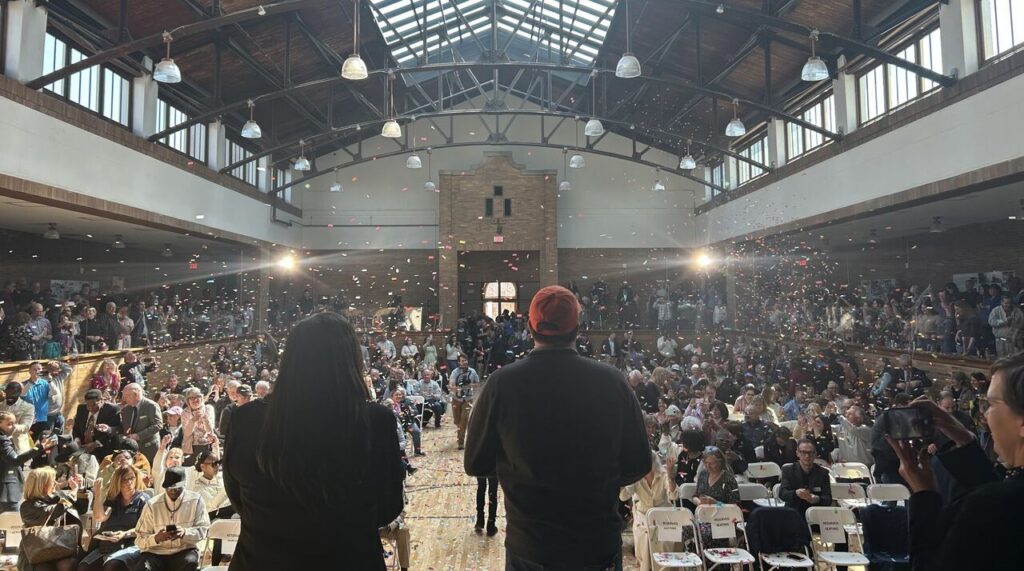
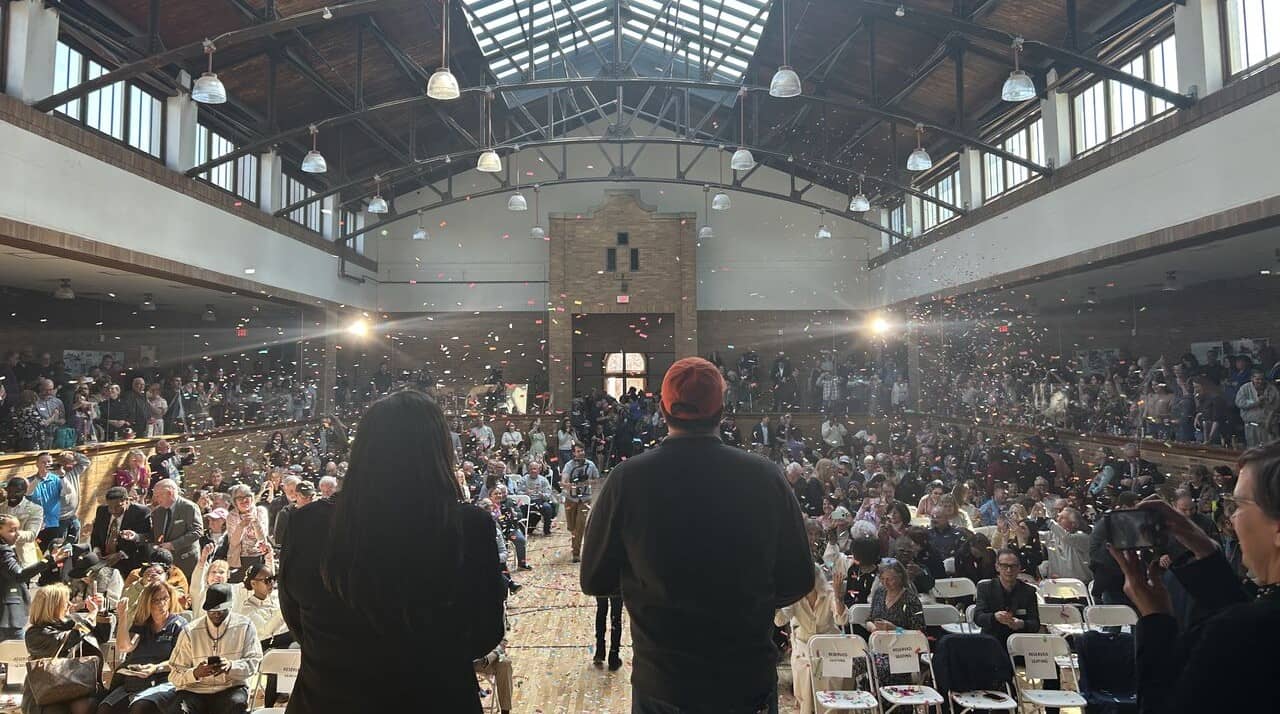
(The header image that accompanies this post is from an event held at the Micah 6 Community Center.) |
|
| Challenges | Pontiac’s economic decline followed a pattern familiar to many industrial communities in the Midwest. As manufacturing jobs disappeared and municipal resources shrank, the city lost more than employment opportunities.
As one local leader noted, Pontiac once had six community centers. But as time passed, each center closed, leaving the community with none. The loss of these institutions contributed to residential instability, reduced support for youth and seniors, and accelerated neighborhood turnover as families increasingly chose to leave the community. |
| Solution | Over more than a decade, the Micah 6 team built trust with residents and created an informal gathering space that brought together children, families, seniors, and individuals experiencing homelessness.
When a long-vacant school building presented an opportunity for redevelopment, Micah 6 surveyed hundreds of neighborhood residents to identify community priorities. The resulting vision centered on youth development, health and wellness, arts and culture, and entrepreneurship. Financing from Opportunity Resource Fund helped bridge critical funding gaps and move the community center project forward while maintaining long-term financial stability. |
| Impact | This emerging community center has become a catalyst for neighborhood stabilization and renewed community confidence. Rather than being viewed as a place people were eager to leave, parts of Pontiac’s west side are increasingly becoming places where families want to live and invest in their future.
The project’s impact is perhaps best illustrated by a new trend: after more than a decade of resident turnover, this neighborhood is attracting new families who specifically seek the opportunities created by the community center’s youth programming. In a community that experienced decades of disinvestment, the center represents more than a building; it serves as an anchor institution helping reverse resident turnover and rebuild community life. |
Community centers also contribute to the development of what sociologist Robert Putnam popularized as “social capital” by creating spaces where residents build relationships, share information, and strengthen networks of trust. Families with strong social networks are often better positioned to weather economic hardship. In this sense, community centers are not simply places where services are delivered; they are critical pieces of community infrastructure that help families thrive, neighborhoods remain resilient, and long-term efforts to close the racial wealth gap gain a stronger foundation.
Normalizing Philanthropy-CDFI Collaboration
Foundations in many states have long played leadership roles in equitable economic development. CDFIs provide a ready-made vehicle for this work because they can translate philanthropic dollars into sustainable lending that recycles capital and reaches borrowers who are often underserved by traditional financial institutions.
The strengths of philanthropy-CDFI partnerships align with our nation’s ongoing challenges: affordable housing shortages, disinvestment in rural communities, and persistent racial wealth disparities. Philanthropy brings patient, flexible, and risk-tolerant capital, while CDFIs bring lending expertise, local relationships, and the ability to deploy capital at scale. Together, they can address financing gaps that neither sector can solve independently.
Perhaps most importantly for our home state of Michigan, we have the ingredients for a true community finance ecosystem: engaged foundations, an organized CDFI network, supportive public-sector partners, and community needs. The next step is not simply increasing funding, but deepening collaboration. Through catalytic investments and long-term partnerships with CDFIs, philanthropy can help build the financial infrastructure needed to drive lasting and inclusive prosperity – across Michigan and around the U.S.





© 2026 Dorothy A. Johnson Center for Philanthropy. All rights reserved.
201 Front Ave SW, Suite 200, Grand Rapids, Michigan 49504 | (616) 331-7585 | jcp@gvsu.edu