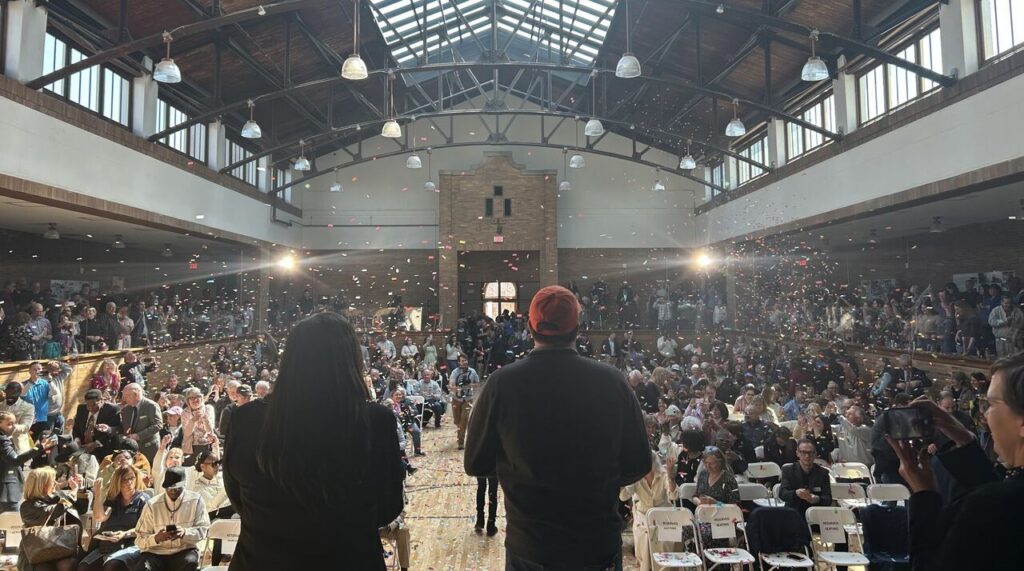
Community foundations (CFs) occupy a distinctive and, in many ways, paradoxical place in American philanthropy. They were born of a democratic impulse — to make charitable giving more inclusive, more locally accountable, and more responsive to the changing needs of real communities — yet they took institutional form in ways that often mirrored the expert-driven, professionally-managed structures of elite philanthropy they sought to complement.
More than a century after the founding of the Cleveland Foundation in 1914, this tension remains unresolved. U.S. community foundations are at a crossroads, compelled by competitive pressures, shifting demographics, and a growing chorus of critics to ask: Are we still truly of, by, and for the community? The focus of this essay is the answer to that question and an exploration of the path toward reclaiming an authentic civic purpose.
“U.S. community foundations are at a crossroads, compelled by competitive pressures, shifting demographics, and a growing chorus of critics to ask: Are we still truly of, by, and for the community?”
The founding of the Cleveland Foundation in 1914 by Frederick H. Goff emerged from two distinct streams of American civic life whose roots predate the republic itself. The first was the tradition of voluntary association that Alexis de Tocqueville identified as the bedrock of American democracy — what he called “the art of association.”
From Benjamin Franklin’s mutual aid societies in colonial Philadelphia to the fraternal orders, reform clubs, and federated charities of the nineteenth century, Americans had long organized collectively to address shared needs (McCarthy, 2003). The United Way movement, which coalesced in Cleveland just one year before the Cleveland Foundation, exemplified this tradition: broad-based, community-driven, and open to contributors of modest as well as of substantial means (Sacks, 2014).
The second stream was the large, endowed, private foundation, a creature of the Gilded Age, exemplified by the philanthropic institutions created from the industrial fortunes of Andrew Carnegie and J.D. Rockefeller. Powerful and well-resourced, these foundations reflected the concentrated wealth and power of their era (Zunz, 2012; Hammack & Anheier, 2013).
Goff’s innovation was to combine these two traditions. His “Cleveland Plan” addressed a specific institutional problem that he called “dead hand control” — the rigidity of perpetual charitable trusts whose purposes could not be revised as community needs changed. The plan addressed this by pooling resources from diverse donors into permanent endowments while vesting grantmaking authority in a citizen board broadly representative of the community (Sacks, 2014; Walkenhorst, 2021; Kroll, 2017).
The model aspired to democratize philanthropy. It aimed, in the words of its founding documents, at the “mental, moral, and physical improvement” of Cleveland’s residents, as determined by the community itself (Colinvaux, 2018, p. 8). In practice, it largely succeeded in making philanthropy accessible to a broader swath of residents (Wu, 2019). Yet the tension between the associational, community-led impulse and the institutional, endowment-driven form that existed at its founding was never fully resolved. That founding tension is precisely what the field continues to navigate today, as many past and present community foundations have functioned less as engines of popular accountability than as more flexible extensions of traditional philanthropy (Colinvaux, 2018; Grønbjerg, 2006).
The legal and regulatory environment has been as important as any philanthropic impulse in shaping U.S. community foundations. The Tax Reform Act of 1969 fundamentally reorganized the philanthropic landscape. Responding to widespread concerns about the misuse of tax-exempt foundations for private benefit, Congress imposed new restrictions on private foundations through this act, including an annual excise tax on assets and tighter regulations on advocacy, investments, and donor relationships.
Community foundations, by contrast, were classified alongside other public charities and were thus exempt from the new tax and from many of the most burdensome private foundation restrictions (Colinvaux, 2018). This favorable treatment came with obligations: CFs were required to actively raise new funds from multiple donors each year, meeting a “public support test” that reinforced their distinct identity as community institutions. The act also recognized the importance of “variance power,” the authority of a CF’s governing board to modify the restrictions on a donor’s gift when those restrictions had become obsolete, thereby institutionalizing Goff’s core insight that philanthropy must remain responsive to the living community (Colinvaux, 2018).
The regulations subsequently developed by the Internal Revenue Service established three features that continue to characterize community foundations: a geographic name linking the organization to a specific community; a governing board representing the public interest rather than any single donor; and a commitment to ongoing public fundraising. In this sense, the tax code became not merely a regulatory framework but a constitutive force in defining what a community foundation is and what it is for. The acceleration of new CF formation throughout the 1970s was, in significant part, a direct consequence of this favorable legal architecture (Colinvaux, 2018; Sacks, 2014).
Thanks to the tireless efforts of Goff, the community foundation model spread rapidly across the United States after 1914, though not uniformly. By 1929, approximately 72 CFs had been established, yet fewer than one in 10 were located in the nation’s largest cities, a pattern that revealed the model’s early appeal to civic leaders in small and mid-sized communities seeking to mobilize local resources (Cleveland Foundation, n.d.; Sacks, 2014). Following a period of contraction during the Great Depression, the movement revived after World War II, with a notable shift from the original bank-trust model to the charitable corporate form, which gave citizen boards greater control over investment decisions (Sacks, 2014).
The movement then entered a period of explosive growth beginning in the 1990s, fueled by rising private wealth, the growing popularity of donor advised funds (DAFs), and sustained support from major philanthropic intermediaries. By 1997, 547 CFs in the United States held over $21 billion in combined assets. By 2022, more than 900 CFs operated across the country, with assets ranging from $6 million to over $13 billion and annual grant disbursements exceeding $15 billion (Sacks, 2014; Beges & Imhoff, 2025). The New York Community Trust pioneered the DAF concept in 1931, and by 2012, DAFs accounted for more than half of all CF contributions and grants, demonstrating both the field’s financial vitality and the increasing centrality of living donors over deferred bequests (Sacks, 2014).
“By 2022, more than 900 CFs operated across the country, with assets ranging from $6 million to over $13 billion and annual grant disbursements exceeding $15 billion.”
This growth was actively supported by a constellation of philanthropic leaders.
Despite this remarkable growth, geographic disparities persist. Community foundations remain most densely concentrated in the Great Lakes region and New England and are significantly underrepresented in the South, Southwest, rural areas, and communities of color. Rural communities, in particular, receive a disproportionately small share of philanthropic resources, including less than 2% of climate-related philanthropic funding, despite being responsible for a substantial portion of emissions (Wu, 2019).
What is often described as an “identity crisis” among community foundations is more precisely a crisis of legitimacy. At stake is not merely how foundations position themselves in a competitive market, but whether they can plausibly claim the public trust on which their civic authority rests. As Colinvaux (2018) has argued, community foundations derive their distinctive legal and moral standing from their commitment to place-based, publicly accountable philanthropy — a commitment that, when subordinated to donor preferences and to growing their endowments, calls into question the entire rationale for their favored tax treatment. Grønbjerg (2006) similarly warns that foundations unable to demonstrate genuine responsiveness to broad community interests risk losing the legitimacy that distinguishes them from commercial philanthropic vehicles. These are not abstract concerns; they go to the heart of what a community foundation is for.
“At stake is not merely how foundations position themselves in a competitive market, but whether they can plausibly claim the public trust on which their civic authority rests.”
The launch of the Fidelity Charitable Gift Fund in 1991 inaugurated the era of national sponsoring organizations (NSOs), public charities affiliated with major financial services firms that offered DAFs on a mass-market basis. Fidelity Charitable rapidly became one of the largest charities in the United States by contributions received, and it was soon joined by Schwab Charitable, Vanguard Charitable Endowment, and others. These NSOs offered many of the same services as community foundations, such as tax-advantaged charitable accounts, donor flexibility, and professional investment management, without the geographic commitment or place-based civic accountability that define the CF model (Colinvaux, 2018).
The competitive pressure exerted by NSOs pushed many community foundations toward a more donor-centric model, prioritizing asset growth and donor services over community impact. As Harrow, Jung, and Phillips (2016) observe, the tension between being donor-focused and community-oriented has long dominated both research and professional practice in the field, with the pressures of asset building and DAFs creating new dynamics in the donor-community nexus.
Critics noted that foundations measuring success primarily by endowment size risked becoming what have been called “community banks” — institutions that raise, steward, and disperse funds according to their clients’ interests but do not operationalize genuine community-building (Beges & Imhoff, 2025, p. 2). No episode crystallized this tension more sharply than the debate sparked by Emmett Carson’s assertion that community foundations should shift away from a strictly local focus to embrace the global interests of modern donors, a vision that critics contended would render CFs indistinguishable from commercial philanthropic products and strip them of their defining civic accountability (Carson, 2013; Somerville, 2013). The problem is structural as much as cultural: fee-generating products, endowment income, and donor-directed gifts do not adequately resource the specialized staffing, research capacity, policy expertise, and long-term relationship-building that transformative community leadership requires (Beges & Imhoff, 2025).
The response to this legitimacy crisis has been neither uniform nor complete, but the direction of travel is increasingly clear. Supported by field-building organizations like CFLeads and animated by a new generation of leaders, a growing number of community foundations are reasserting the primacy of community impact over asset accumulation.
The conceptual foundation for this shift was laid in part by Bernholz, Fulton, and Kasper’s 2005 report, On the Brink of New Promise, published by the Monitor Institute. CFLeads (n.d.-b) has called it a “foundational document for the field.” The report argued that community foundations were entering a new period, one that would demand far more than refined stewardship and competent grantmaking. It pushed the field toward strategic community leadership, insisting that “strategic positions on challenging issues, cross-sector solutions, and a relentless commitment to the betterment of communities” must become part of community foundation practice (Bernholz et al., 2005). The report called on the field to make three critical shifts: from institution to community; from financial assets to long-term leadership; and from competitive independence to coordinated impact (Bernholz et al., 2005; CFLeads, n.d.-b). Two decades later, these imperatives remain urgent.
Research by Wu (2021, 2024) and Easterling (2011) provides empirical grounding for these aspirations, demonstrating that community leadership is not merely a normative ideal but a measurable set of organizational capacities. Wu (2021) identifies at least six distinct functions — strategizing, convening, knowledge building, capacity building, cross-sector partnering, and policy engagement — that together constitute a multidimensional leadership practice. Easterling (2011) complements this framework by showing how community assessment can serve as the empirical entry point for foundations moving from facilitative to more directive leadership: not merely convening conversations, but equipping communities to set priorities and hold institutions accountable. Taken together, the evidence suggests that foundations willing to invest in these capacities can hold donor service and community leadership logics simultaneously; that these are not competing values but potentially reinforcing ones (Wu, 2024).
“[C]ommunity leadership is not merely a normative ideal but a measurable set of organizational capacities … [with] at least six distinct functions — strategizing, convening, knowledge building, capacity building, cross-sector partnering, and policy engagement — that together constitute a multidimensional leadership practice.”
Realizing this vision requires changes not only in strategy but in business models. The Aspen Institute’s 2025 analysis identifies four areas of business model experimentation — donor alignment, fee restructuring, catalytic investment, and strategic partnership — as essential to this transformation (Beges & Imhoff, 2025). The underlying aspiration is to move community foundations from “transactional ‘community bank’ to a transformational ‘community asset’” — trusted institutions embedded in civic life, accountable to the whole community, and capable of driving systemic change.
Field-based research shows that this transition is less a discrete strategic choice than an iterative organizational journey. Case studies of six community foundations by Paarlberg, Walk, and Horning (n.d.) demonstrate that community leadership emerges gradually through shifts in governance, donor engagement, and internal culture, and generally only after a foundation has achieved basic operational stability. The path moves from grantmaking toward convening, facilitation, and systems-level action, and it is neither linear nor predictable.
American community foundations have always embodied tensions. Tensions exist between their democratic aspirations and their dependence on private wealth; between accountability to the communities they serve and deference to the donors who fund them; and between their identity as civic institutions and the relentless pressure to perform as financial ones.
Foundations that resolve this tension by defaulting to donor satisfaction risk losing not only their civic identity but the legitimacy that distinguishes them from commercial philanthropic platforms. Those that lean into genuine community leadership face real financial and organizational challenges, but also the possibility of becoming something the philanthropic field genuinely needs: trusted, locally rooted civic institutions capable of mobilizing people, knowledge, and resources around shared purposes.
Beges, S., & Imhoff, E. (2025). Evolving the community foundation business model of the future: A path towards sustainability and impact. Aspen Institute Program on Philanthropy and Social Innovation. https://www.aspeninstitute.org/publications/evolving-the-community-foundation-business-model/
Behrens, T. & Mangrulkar, L. (2013). Michigan Community Foundations’ Youth Project (MCFYP) 20th anniversary report. Dorothy A. Johnson Center for Philanthropy at Grand Valley State University. https://www.michiganfoundations.org/system/files/documents/2021-09/MCFYP-Final-Report.pdf
Bernholz, L., Fulton, K., & Kasper, G. (2005). On the brink of new promise: The future of U.S. community foundations. Blueprint Research & Design and Monitor Institute. https://www2.deloitte.com/content/dam/Deloitte/us/Documents/monitor-institute/us-monitor-institute-on-the-brink-of-new-promise.pdf
Carson, E. D. (2013, Winter). Redefining community foundations. Stanford Social Innovation Review. https://ssir.org/articles/entry/redefining_community_foundations
CFLeads. (n.d.-a). Who we are. https://cfleads.org/who-we-are/
CFLeads. (n.d.-b). Igniting the future of community foundations. https://cfleads.org/what-we-do/field-leadership/igniting-the-future-of-community-foundations/
Colinvaux, R. (2018). Defending place-based philanthropy by defining the community foundation. Brigham Young University Law Review, 2018(1), 1–55.
Easterling, D. (2011). Promoting community leadership among community foundations: The role of the Social Capital Benchmark Survey. The Foundation Review, 3(1). https://doi.org/10.4087/FOUNDATIONREVIEW-D-11-00022
Grønbjerg, K. A. (2006). Foundation legitimacy at the community level in the United States. In K. Prewitt, M. Dogan, S. Heydemann, & S. Toepler (Eds.), Legitimacy of philanthropic foundations: United States and European perspectives (pp. 150–174). Russell Sage Foundation.
Harrow, J., Jung, T., & Phillips, S. D. (2016). Community foundations: Agility in the duality of foundation and community. In T. Jung, S. D. Phillips, & J. Harrow (Eds.), The Routledge companion to philanthropy (pp. 308–321). Routledge.
Hammack, D. C., & Anheier, H. K. (2013). A versatile American institution: The changing ideals and realities of philanthropic foundations. Brookings Institution Press.
Kroll, J. (2017, November 17). Frederick Goff’s legacy lives on within the Cleveland Foundation. Cleveland.com. https://www.cleveland.com/business/2017/11/frederick_goffs_legacy_lives_o.html
Lilly Endowment. (n.d.). Giving Indiana Funds for Tomorrow (GIFT). https://lillyendowment.org/our-work/community-development/strengthening-indiana/giving-indiana-funds-for-tomorrow/
McCarthy, K. D. (2003). American creed: Philanthropy and the rise of civil society, 1700–1865. University of Chicago Press.
Paarlberg, L. E., Walk, M., & Horning, C. (n.d.). The path to community leadership. Indiana University Lilly Family School of Philanthropy. https://scholarworks.indianapolis.iu.edu/server/api/core/bitstreams/cbe2f4cc-c9bf-45f5-89aa-d1e019b51719/content
Sacks, E. W. (2014). The growing importance of community foundations. Indiana University Lilly Family School of Philanthropy. https://hdl.handle.net/1805/6364
Somerville, B. (2013, October 22). Keeping the community in community foundations. Stanford Social Innovation Review. https://ssir.org/articles/entry/keeping_the_community_in_community_foundations
The Cleveland Foundation. (n.d.). Community foundation movement: How Goff’s idea enriched the world’s social capital. Retrieved August 2025, from https://www.clevelandfoundation100.org/foundation-of-change/invention/national-community-foundation-movement/
Walkenhorst, P. (2021). Foundations, community. In R. A. List, H. K. Anheier, & S. Toepler (Eds.), International encyclopedia of civil society. Springer. https://doi.org/10.1007/978-3-319-99675-2_38-1
Wu, V. C.-S. (2019). The geography and disparities of community philanthropy: A community assessment model of needs, resources, and ecological environment. VOLUNTAS: International Journal of Voluntary and Nonprofit Organizations, 32(2), 351–371. https://doi.org/10.1007/s11266-019-00180-x
Wu, V. C. S. (2021). Community leadership as multi-dimensional capacities: A conceptual framework and preliminary findings for community foundations. Nonprofit Management and Leadership, 32(1), 29–53. https://doi.org/10.1002/nml.21467
Wu, V. C. S. (2024). Community leadership and donor-advised funds: Navigating logics of donor services and community leadership in community foundations. Nonprofit and Voluntary Sector Quarterly, 54(4), 773–803. https://doi.org/10.1177/08997640241279057
Zunz, O. (2012). Philanthropy in America: A history. Princeton University Press.







© 2026 Dorothy A. Johnson Center for Philanthropy. All rights reserved.
201 Front Ave SW, Suite 200, Grand Rapids, Michigan 49504 | (616) 331-7585 | jcp@gvsu.edu