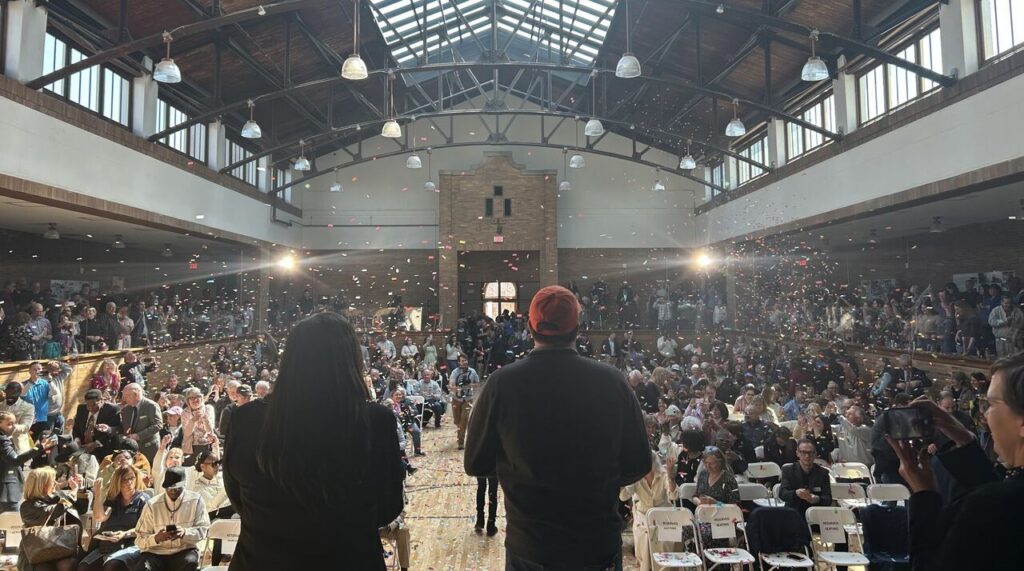
If Part I of this series traced how philanthropy lost its connection to a fuller, richer, relational meaning, Part II asks what happens when we look at how people actually give — not through the lens of foundations and endowments, but through the evidence of everyday practice. What that evidence reveals is less a story of decline than one of reclamation: a growing body of scholarship and practice that is, quietly and sometimes not so quietly, bringing the love back to philanthropy.
The most basic challenge to the narrow definition comes from the data itself. In How We Give Now, Bernholz (2021) begins not with a survey of charitable donations but with a simple question to participants: How do you help? The answers span an enormous range — monetary gifts, yes, but also mentoring, participating in giving circles, supporting local economies, and showing up for neighbors.
Crucially, Bernholz notes that many individuals do not describe these acts as “giving” at all, much less as philanthropy. Formal metrics — IRS Forms 990, public opinion surveys, the annual Giving USA tallies of charitable dollars — systematically undercount the true scope of generosity by measuring only what passes through registered nonprofit organizations. The love, in other words, is already there. We have simply been looking in the wrong places.
Dietz’s (2024) research deepens this picture. His work for the Do Good Institute at the University of Maryland demonstrates that social connectedness and generosity are not merely correlated but mutually reinforcing: individuals with stronger community ties are significantly more likely to volunteer and donate, and the act of giving itself increases the likelihood of joining community groups and organizations. Philanthropy, on this account, is not merely a transfer of resources; it is a social practice that builds the very relationships it draws upon — close to what Payton and Moody (2008) called “voluntary action for the public good,” though the relational aspect is something their definition points toward but does not name. This finding carries a pointed implication: if we define philanthropy only as monetary donations, we miss the relationship at its heart, which, as the etymology always insisted, is the point.
“[I]f we define philanthropy only as monetary donations, we miss the relationship at its heart, which, as the etymology always insisted, is the point.”
The evidence of recovery is not limited to scholarly sources. Across the U.S., giving circles — groups of individuals who pool their resources and make collective giving decisions — have grown into a substantial and documented movement. Research from the Johnson Center, Philanthropy Together, and Colmena Consulting finds that collective giving is shifting the narrative around who counts as a philanthropist (Loson-Ceballos & Layton, 2024, pp. 26–30). Giving circle members, many of them from communities of color, are reclaiming the term in their own voices. Jill Coleman of SisterFund put it directly: “We find ourselves as donors and philanthropists before we knew what philanthropy was. We only thought that Warren Buffett was a philanthropist or MacKenzie Scott. We are philanthropists in our own right” (Loson-Ceballos & Layton, 2024, p. 20).
Hali Lee’s (2025) The Big We makes the same case at book length: collective giving does not merely pool resources, it builds belonging, deepens civic life, and transforms who gets to participate in decisions about community.
A parallel movement is reshaping philanthropic practice from the fundraising side. Community-Centric Fundraising(CCF) began in 2018 when a group of fundraisers of color in Seattle gathered to name a shared frustration: that conventional fundraising centered donors rather than communities, reinforcing the very hierarchies that philanthropy claimed to address (Community-Centric Fundraising, 2023). What began as a local conversation grew into a global movement, officially launched in 2020 with 10 principles grounded in racial and economic justice (Community-Centric Fundraising, 2024).
At the heart of those principles is a challenge to the donor-centric model — a call to shift philanthropic practice toward authentic community relationships, centering the needs and voices of those most affected rather than those with the largest checkbooks. The Johnson Center’s national study of CCF adoption confirms that organizations embracing these principles are not simply changing fundraising techniques; they are reconceiving what philanthropy is for (Dale & Hemachandra, 2025).
That reconception is visible in the data on donors of color as well. The title of Lee, Vaid, and Maxton’s (2022) study says it plainly: Philanthropy Always Sounds Like Someone Else. Their portrait of high-net-worth donors of color reveals complex motivations rooted in personal histories, community ties, and a deep ambivalence toward traditional philanthropic institutions — ambivalence that often coexists with extraordinary generosity. These donors are not failing to be philanthropists. They are practicing a different kind of philanthropy, one that the dominant framework was not built to recognize.
“The African philosophy of ubuntu — ‘I am because we are’ — grounds generosity in relationality and shared humanity rather than individual surplus.”
Non-Western traditions have long offered a different vocabulary for this practice. The African philosophy of ubuntu — “I am because we are” — grounds generosity in relationality and shared humanity rather than individual surplus (Nwokoro, 2025). In Latin America, forms of community service such as tequio — collective labor undertaken for shared community benefit — are deeply rooted in pre-Columbian Indigenous governance systems and reflect longstanding norms of reciprocity, obligation, and communal responsibility (Layton, 2022).
In Vietnam, as Doan (2023) observes, the very language used for philanthropy foregrounds love, goodness, and goodwill in ways that resonate directly with the Greek origins of the English term. These traditions are evidence that the original meaning of philanthrôpía — the love of humankind, expressed in action — has been preserved in many places even as it was narrowed in the U.S. and much of the Global North.
These traditions, recovered and named, are what the conclusion now draws together.
Where is the love? It was there all along.
It was there in the networks of Black Philadelphia that Du Bois mapped, in the reciprocal solidarities of Hull-House, in Madam C. J. Walker’s gospel of giving, in the mutual aid societies that sustained communities long before anyone called them philanthropic.
It is there today in giving circles whose members are claiming the word philanthropist for themselves, in fundraisers of color reconceiving what the sector is for, in the ubuntu of shared humanity, in the tequio of collective labor, in the Vietnamese understanding of generosity as an expression of love and goodwill. It was never absent. It was unnamed.
The words we use powerfully shape how we see, understand, and act in the world. When philanthropy came to mean the large-scale monetary giving of the wealthy, it did not simply describe a practice. It prescribed one. It determined who qualified as a philanthropist, which acts counted as giving, and which traditions of generosity were visible to researchers, policymakers, and funders — and which were not. A narrow word produces a narrow sector, one that measures dollars rather than relationships, outputs rather than belonging, transactions rather than love.
“The words we use powerfully shape how we see, understand, and act in the world. … A narrow word produces a narrow sector, one that measures dollars rather than relationships, outputs rather than belonging, transactions rather than love.”
Recovering the fuller meaning is not nostalgia for ancient Greece. It is a practical argument about what philanthropy can do and who it can include. Doan (2023) makes this point with characteristic directness: rather than abandon the word for “generosity” or some other substitute, she would prefer we bring the philos back — pay more attention to everyday givers, ensure that the expressive and relational roles of giving are represented in how we define and measure it, and resist the tendency to let the language of the sector serve only its most powerful actors.
Pamala Wiepking (2024) has suggested that a different word may ultimately be necessary. That may prove true. But this essay has argued, with Doan, that the word is worth fighting for first — because what it once meant still matters, and because the communities already practicing philanthrôpía in its fullest sense deserve to have that practice recognized for what it is.
The stakes of this argument extend beyond terminology. The Generosity Commission (2024) has documented a troubling decline in the proportion of Americans who give and volunteer — a decline that runs alongside rising social isolation and eroding civic trust. The Surgeon General has named loneliness an epidemic (U.S. Department of Health and Human Services, 2023). If philanthropy is understood only as the giving of money by the wealthy, it has little to offer in response to these crises. If it is understood as the organized expression of love for humankind — as the practice of showing up for one another across difference, building the relationships that sustain communities, contributing what we can and receiving what we need — then it is one of the most powerful tools we have.
Recovering that understanding is what this essay has argued for. The reflections gathered here on the meaning of philanthropy, alongside an earlier essay on the meaning of community (Layton, 2026a), are offered as preparation for a larger argument: that community philanthropy, understood in its fullest sense, represents a distinct and transformative practice — one that brings together everything these two words, properly recovered, have always meant. While that argument is made elsewhere (Layton, 2026b), it rests on the foundation that philanthrôpía is essentially about love.
Bernholz, L. (2021). How we give now: A philanthropic guide for the rest of us. MIT Press.
Community-Centric Fundraising. (2023). History. https://communitycentricfundraising.org/history/
Community-Centric Fundraising. (2024). CCF’s 10 principles. https://communitycentricfundraising.org/ccf-principles/
Dale, E. J., & Hemachandra, M. (2025, February). Adopting community-centric fundraising: Findings from a national study. Dorothy A. Johnson Center for Philanthropy at Grand Valley State University. https://johnsoncenter.org/wp-content/uploads/2025/02/Community-Centric-Fundraising-Report-FINAL.pdf
Dietz, N. (2024). Social connectedness and generosity: A look at how associational life and social connections influence volunteering and giving (and vice versa). Do Good Institute, University of Maryland. https://dogood.umd.edu/sites/default/files/2024-01/FINAL_SocialConnectednessandGenerosity_2024.pdf
Doan, D. (2023, August 24). Where is the love? Philanthropy research in Vietnam and the USA. HistPhil. https://histphil.org/2023/08/24/where-is-the-love-philanthropy-research-in-vietnam-and-the-usa/
Generosity Commission. (2024). Everyday actions, extraordinary potential: The power of giving and volunteering.The Giving Institute and Giving USA Foundation. https://www.thegenerositycommission.org/wp-content/uploads/2024/09/DIGITAL_TGC_FullReport_092424.pdf
Layton, M. D. (2022). Philanthropy in Latin America. In R. List, H. Anheier, & S. Toepler (Eds.), International encyclopedia of civil society (2nd ed.). Springer.
Layton, M. D. (2026a). More than a neighborhood: The many meanings of “community”. Dorothy A. Johnson Center for Philanthropy at Grand Valley State University. https://johnsoncenter.org/blog/more-than-a-neighborhood-the-many-meanings-of-community
Layton, M. D. (2026b). Defining community philanthropy: Principles and dimensions of a transformative practice. The Foundation Review, 18(1). https://doi.org/10.9707/1944-5660.1750
Lee, H. (2025). The big we: How the power of community can transform philanthropy. Zando.
Lee, H., Vaid, U., & Maxton, A. (2022, March). Philanthropy always sounds like someone else: A portrait of high net worth donors of color. Donors of Color Network. https://www.donorsofcolor.org/resources/philanthropy-always-sounds-like-someone-else-0c68d
Loson-Ceballos, A., & Layton, M. D. (2024). In abundance: An analysis of the thriving landscape of collective giving in the U.S. Dorothy A. Johnson Center for Philanthropy at Grand Valley State University and Philanthropy Together. https://johnsoncenter.org/wp-content/uploads/2024/04/in-abundance-an-analysis-of-the-thriving-landscape-of-collective-giving-in-the-u-s.pdf
Nwokoro, C. O. (2025). From Ubuntu to Fratelli Tutti: “I am because we are” and relational solidarity. Journal of Moral Theology, 14(2), 92–117.
Payton, R. L., & Moody, M. P. (2008). Understanding Philanthropy: Its Meaning and Mission. Indiana University Press.
Wiepking, P. (2024, July 18). Pamala Wiepking: Understanding Global Generosity [Audio podcast episode]. In Philanthropisms. Why Philanthropy Matters. https://whyphilanthropymatters.com/podcast/pamala-wiepking-understanding-global-generosity/
U.S. Department of Health and Human Services. (2023). Our epidemic of loneliness and isolation: The U.S. Surgeon General’s advisory on building connection and community. https://www.hhs.gov/sites/default/files/surgeon-general-social-connection-advisory.pdf



© 2026 Dorothy A. Johnson Center for Philanthropy. All rights reserved.
201 Front Ave SW, Suite 200, Grand Rapids, Michigan 49504 | (616) 331-7585 | jcp@gvsu.edu