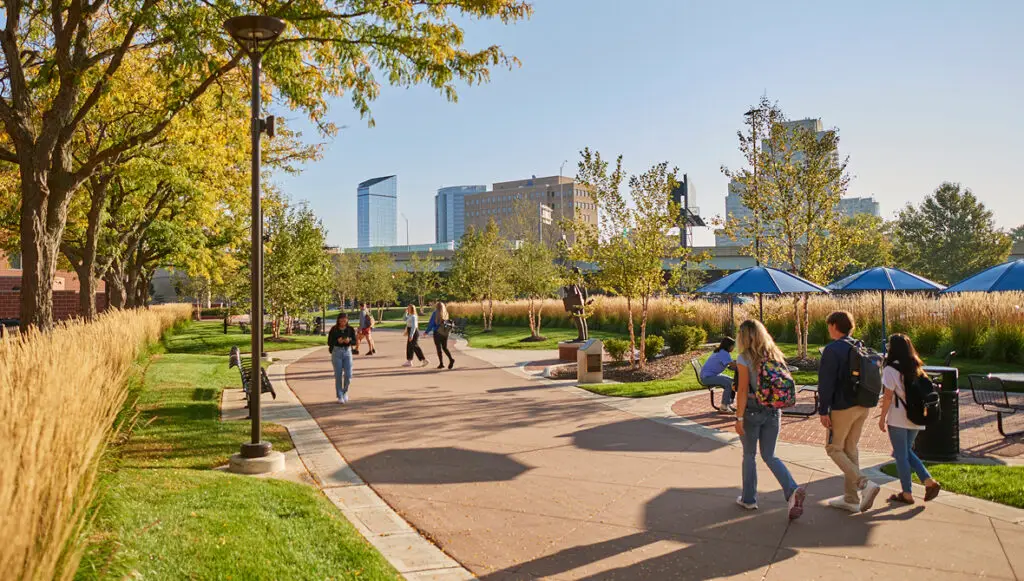
In the first quarter of 2025, I spent a week in Tangier with friends from different corners of the world, each one engaged in some form of community philanthropy. We had gathered to talk about measuring what matters, though our conversations kept circling back to systems and structures that so often fail to focus on what matters to communities.
When the topic of the shifting global landscape came up in our conversation, I was struck by a markedly different response from what I had been hearing at academic gatherings and what I was reading in development blogs and LinkedIn posts. These community philanthropy practitioners wondered if there might just be a silver lining. Perhaps this shift might redirect attention toward what has always worked: locally led development, in its most authentic forms.
For decades, international philanthropy has operated under a particular logic: wealthy-country governments and large development organizations send money, expertise, and frameworks to lower-income countries, expecting measurable results in return. That logic is cracking under the weight of its own contradictions and a shifting global landscape. Three shifts have converged to create what may be a defining moment for the future of global development.
Set against this backdrop are growing calls for a return to locally led, community-rooted systems of development. Interestingly, these calls have advanced using three different perspectives. I refer to these different perspectives as the optimists, the pessimists, and the transformers.
The optimists say, “We don’t need you; we can do this on our own.” The problem for the optimists is structural inequalities. While locally led development offers a resilient strategy, local systems cannot immediately replace large declines in funding because domestic resource mobilization takes time.
The pessimists, while relieved that they are no longer controlled by outsiders, recognize that accompanying that shift in power is an increase in risk and burdens without adequate resources and safeguards.
The transformers believe that locally led development will only be possible if accompanied by systems change. More specifically, they call for investment in financing systems and approaches that change power structures to ensure that local leadership is sustainable.
For all three perspectives, the outstanding question is whether this moment of external disruption becomes a genuine opportunity for change or whether it simply shifts risk and burden downward while leaving power structures intact.
“[T]he outstanding question is whether this moment of external disruption becomes a genuine opportunity for change or whether it simply shifts risk and burden downward while leaving power structures intact.”
To understand what is at stake, it may help to briefly trace how we arrived at this moment. It is important to note that the international development system was constrained before this current wave of aid cuts. Decades of top-down programming, upward accountability (reporting to donors rather than to communities), and compliance-heavy funding have hollowed out local agency, or the capacity of communities to define and lead their own development.
Institutional philanthropy, as it appeared in different forms across the world, showed a tendency for undermining the local leadership it often claimed to support by restricting what grantees could do, by demanding reporting formats that served foreign funders’ expectations, and by ignoring or supplanting informal networks and practices through which communities had long supported one another.
Compounding these dynamics, international actors repeatedly structured their funding in ways that pitted local nonprofits against one another in competition for grants, for legitimacy in the eyes of foreign funders, and for a seat at decision-making tables. This donor-induced competition generated perverse incentives that undermined coordination, weakened collective advocacy, and eroded the solidarity that effective community-led development requires.
Then along came significant ODA cuts, increasing restrictions on cross-border philanthropy, and a lack of results a decade after the Grand Bargain was launched. And yet, in facing these shakeups to global development work, opportunities become more visible, and change seems plausible. When the practitioners in Tangier wondered if there might be a silver lining, they were not being naive about the challenges ahead. They were pointing to something the development sector has long resisted acknowledging. They believe that a system built on dependency, coloniality, and upward accountability can never produce the legitimacy, sustainability, or community ownership it promised.
“[A] system built on dependency, coloniality, and upward accountability can never produce the legitimacy, sustainability, or community ownership it promised.”
The danger in the current moment is that less money and less control produce re-centralization, or a pulling back of resources and decision-making authority toward large international actors rather than outward and downward distribution that genuinely democratic, locally led development requires. When funding declines, donors tend to concentrate grants in fewer, larger organizations they already know and trust, which often means international NGOs and formal institutions rather than community groups. Meanwhile, remaining funds become more restricted, risk-averse, and compliance-heavy: the precise conditions that have most constrained local leadership in the past.
The risk is that “locally led” continues as rhetoric while responsibility is devolved without the accompanying authority or resources. Local actors cannot lead without adequate decision-making power, flexible funding, and protection against elite capture — which refers to an observed tendency for resources and influence to be absorbed by local elites rather than reaching broader communities. A contraction that simply shifts burdens to communities while leaving power structures intact, or creates new power structures, is not the desired end goal.
The alternative, and the opportunity, is a deliberate reorientation of foreign assistance toward something new. For some, this something new requires global actors to invest in, rather than substitute for, community philanthropy. For others, this something new requires attention to relationships. Regardless, complementarity requires concrete shifts in how external actors think about and engage in cross-border giving. Three recommendations include: offering transitional financing, rethinking what counts as philanthropy, and reframing accountability.
Transitional funding refers to external funding that is explicitly catalytic — long-term, flexible, and designed to build the infrastructure, ecosystems, and trust that allow local philanthropic capacity to grow. This is a different approach than most cross-border donors currently take, as it requires accepting that success looks like your own eventual irrelevance. The goal is a self-sustaining, local giving ecosystem rather than a perpetual funding relationship.
“The goal [of transitional funding] is a self-sustaining, local giving ecosystem rather than a perpetual funding relationship.”
Rethinking what counts as “philanthropy” is an equally important shift. Institutionalized philanthropy, which global funders are more likely to recognize and support, is only a fraction of how communities resource their collective well-being. Informal mutual aid networks, diaspora remittances, community savings groups, religious tithing, and the everyday generosity of neighbors, on the other hand, have always been the bedrock of community resilience. Investments that enable remittance flows, lift up everyday givers, and recognize informal giving as legitimate philanthropy are investments in existing strengths, not charity delivered from outside.
A third shift that is needed is to reframe accountability. Current accountability frameworks in international development focus upwards, toward donors and their reporting requirements. A complementarity approach would center community interests, or at least position them as equal to other actors, and value the relationships among these actors. It would also require robust safeguards against elite capture from the outset, to ensure resources reach the communities they are intended to serve.
When external actors shift in these three ways, we will observe more of the long-term benefits of locally led development. Legitimacy and trust will grow from proximity and authentic participation. Sustainability and resilience will be built through social capital and civic infrastructure that outlasts grant cycles. And development outcomes will align more closely with local priorities because local actors are in the lead. Established research on local leadership, local ownership, and locally-led development — from thinkers like Elinor Ostrom, Robert Putnam, Robert Chambers, Andrea Cornwall, Daniel P. Aldrich, Ghazala Mansuri & Vijayendra Rao, and others — consistently supports this logic.
Making this transition requires committed action from different actors. Governments can support locally governed philanthropic mechanisms by creating legal, regulatory, and tax incentives for transitional financing and domestic resource mobilization. Philanthropists can shift from control to complementarity, from short-term projects to long-term relationships, and from upward accountability to shared learning. Philanthropy practitioners and intermediaries can amplify community-led models and facilitate equitable partnerships. Meanwhile, community groups can share their experiences, lifting up local knowledge, local practices, successes, and challenges.
In an era defined by shrinking ODA and concerns over foreign influence, the future of development depends upon deeper investment in locally rooted systems of giving. The conversation in Tangier stays with me. While many in the development sector are asking, “How do we replace these ODA funding cuts?”, global community philanthropy practitioners are asking, “What is possible now?” And one thing that is possible is to reimagine support for locally rooted giving practices.






© 2026 Dorothy A. Johnson Center for Philanthropy. All rights reserved.
201 Front Ave SW, Suite 200, Grand Rapids, Michigan 49504 | (616) 331-7585 | jcp@gvsu.edu